Google Doesn't Rank Pretty. It Ranks Findable.
Your website might be the best-looking one in your trade, in your town.
It might also get you zero calls this week.
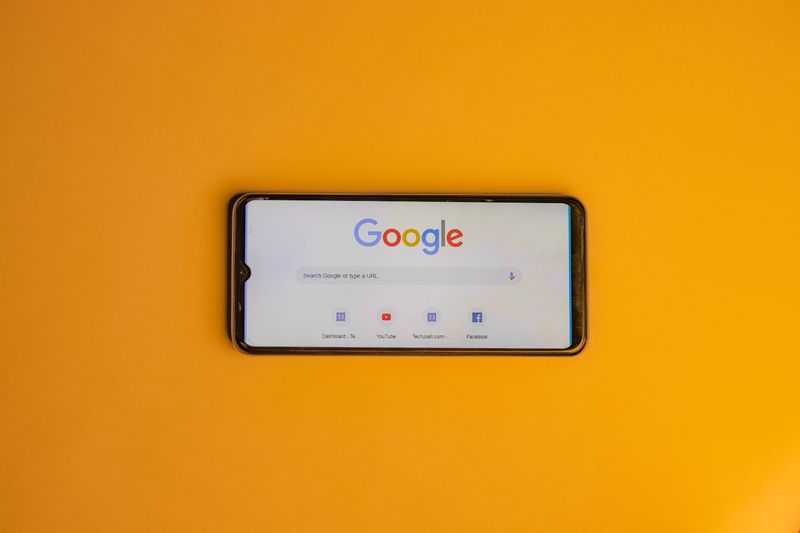
Here's why. Right now, someone near you is typing your trade and your town into their phone. They aren't looking at websites. They're looking at a map, a handful of names, some stars and a button that says Call. If your name isn't there, your homepage never gets the chance to impress anyone.
Most owners believe a myth without ever saying it out loud: if the site looks beautiful, the customers will come. It feels true. A good-looking site feels like a good business.
Google doesn't rank pretty. It ranks businesses it can find, trust and book in seconds.
We've audited more than 800 local businesses across Canada, the US, the UK and Australia. The country changes. The pattern doesn't. The prettiest sites are often the quietest. Brilliant at the work. Invisible online.
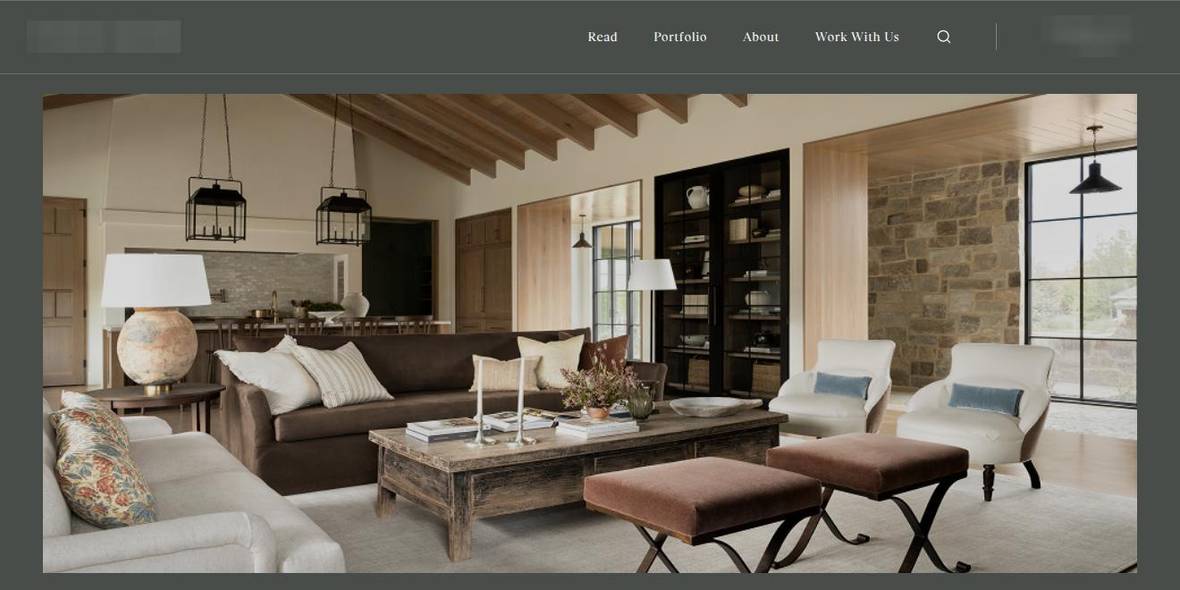
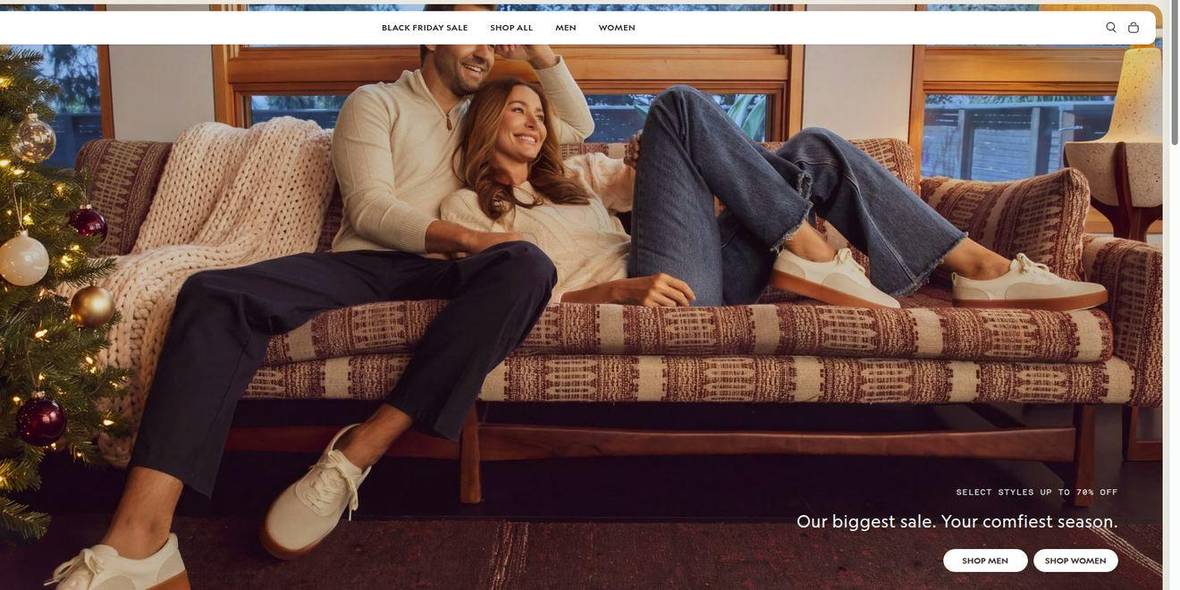
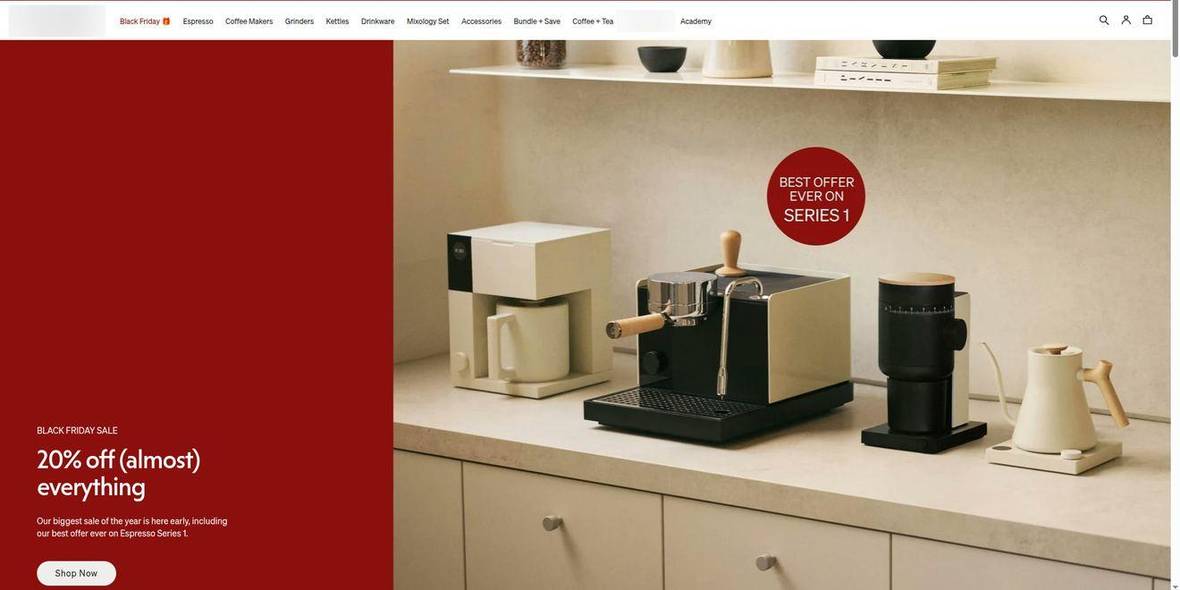
The business that gets the call often has a plain site with a complete Google profile, recent reviews and a phone number you can tap in one second.
Findable means three doors, in this order
Between a stranger's search and your phone ringing, there are three doors. Every one has to open. Being pretty isn't one of them.
Can Google find you at all?
You need a complete Google Business Profile. You need the same name, phone number and hours everywhere you appear. And you need pages on your site that say plainly what you do and where you do it.
Search your trade and your town.
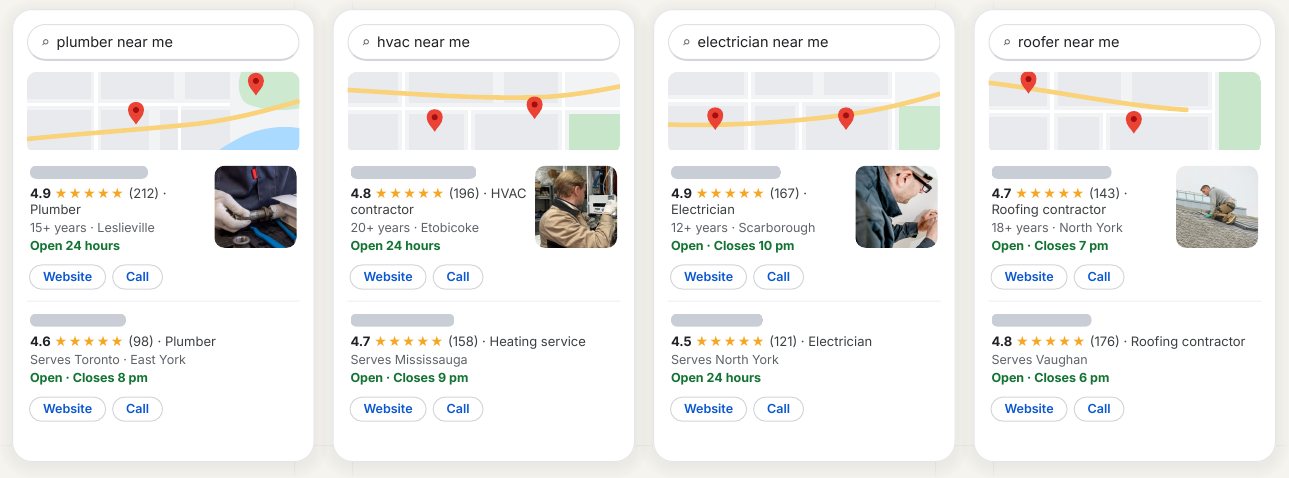
If you aren't there, then as far as that customer knows, you don't exist. No design fixes that.
Would a stranger trust you?
Reviews do most of this work, and old ones don't count for much. Twelve reviews from two years ago can make a busy business look closed.
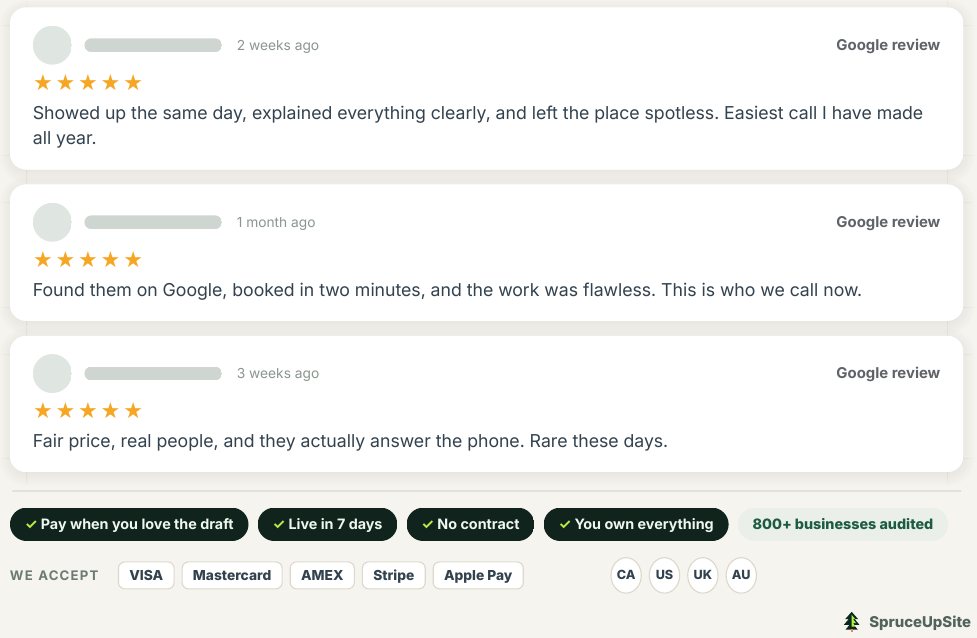
Real photos of real jobs help. A profile that matches your website, with the same services, same area and same number, helps more than most owners realise.
Can they reach you before they change their mind?
The phone number should be visible without scrolling. Tap to call should work. If you have a form, it should actually send. Every extra step between "I found you" and "I called you" hands the job to the next listing down.
That's the whole test.
Found. Trusted. Bookable. Pretty comes fourth.
Why the pretty sites go quiet
Most of the businesses we audit score 2 out of 10 or less on our ten presence checks. Not because they're bad at the work. Because the same few things keep failing:
- The website looks great, but the Google profile is half finished.
- The reviews stopped years ago.
- The phone number hides in the footer, or doesn't match the listing.
- Search the trade and the town the way a customer would, and the site is nowhere.
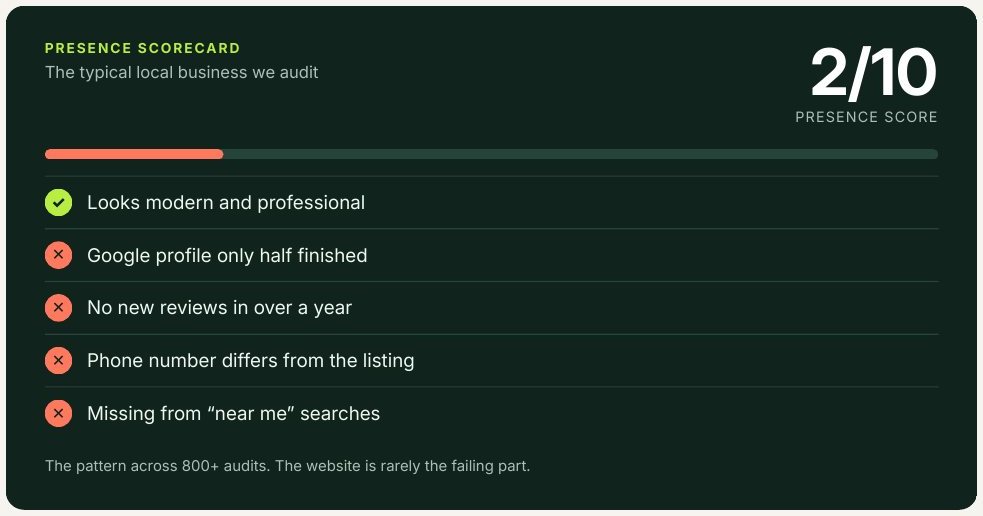
Read that list again. Not one of those is a design problem.
A redesign fixes the website. It does nothing for the profile, the reviews or the mismatch. Owners regularly pay for a full rebuild when two or three specific fixes would have moved the needle.
Looking good matters, but only after the doors open.
A beautiful site that nobody finds is a shop with the lights on and the door locked.
That's why we score before we quote. The score shows which parts are failing. A redesign is only worth paying for when the website is one of them.
The 10-second test: do it tonight
Pick up your phone and search the way a customer would: your trade and your town.
Don't search your business name. Anyone who already knows your name has already found you. The test is whether a stranger can.
Then answer three questions honestly:
- Am I there?
- Would a stranger trust what they see?
- Could they call me in one tap?
Tap a door when the answer is yes. Nothing is saved or sent.
Any "no" is your starting point. Fix it before you spend anything on how the site looks.
Start with the score, then decide
If you'd rather not guess, get a free audit at spruceupsite.com. A person scores your business against the ten published checks, shows you the working and tells you plainly which parts are costing you calls.
If your website is fine, we'll say so, and you've saved yourself a redesign you didn't need. If it's failing, you'll know exactly what the money has to fix before you ask anyone for a quote.
Your online presence should make you look as good as the work you do.
SpruceUpSite